Wednesday, November 29, 2023

He/She/They ~ How We Talk About Gender and Why It Matters~ Book Tour with Schuyler Bailar & special guest Dylan Mulvaney


He/She/They ~ How We Talk About Gender and Why It Matters~

 Book Tour with Schuyler Bailar & special guest Dylan Mulvaney


On November 8th, I attended Schuyler Bailar’s book tour with the special guest Dylan Mulvaney. It was such a valuable experience that I will never forget and I would like to share my experience and thoughts. 


Schuyler Bailar is an author, educator, and activist advocating for LGBTQ+ rights. During his swim career at Harvard, he became the first openly trans man to compete in the NCAA Division I for any sport. He is continuing to educate others about LGBTQ+ issues, doing four research studies at Harvard, and released a book called He/She/They in 2023. 


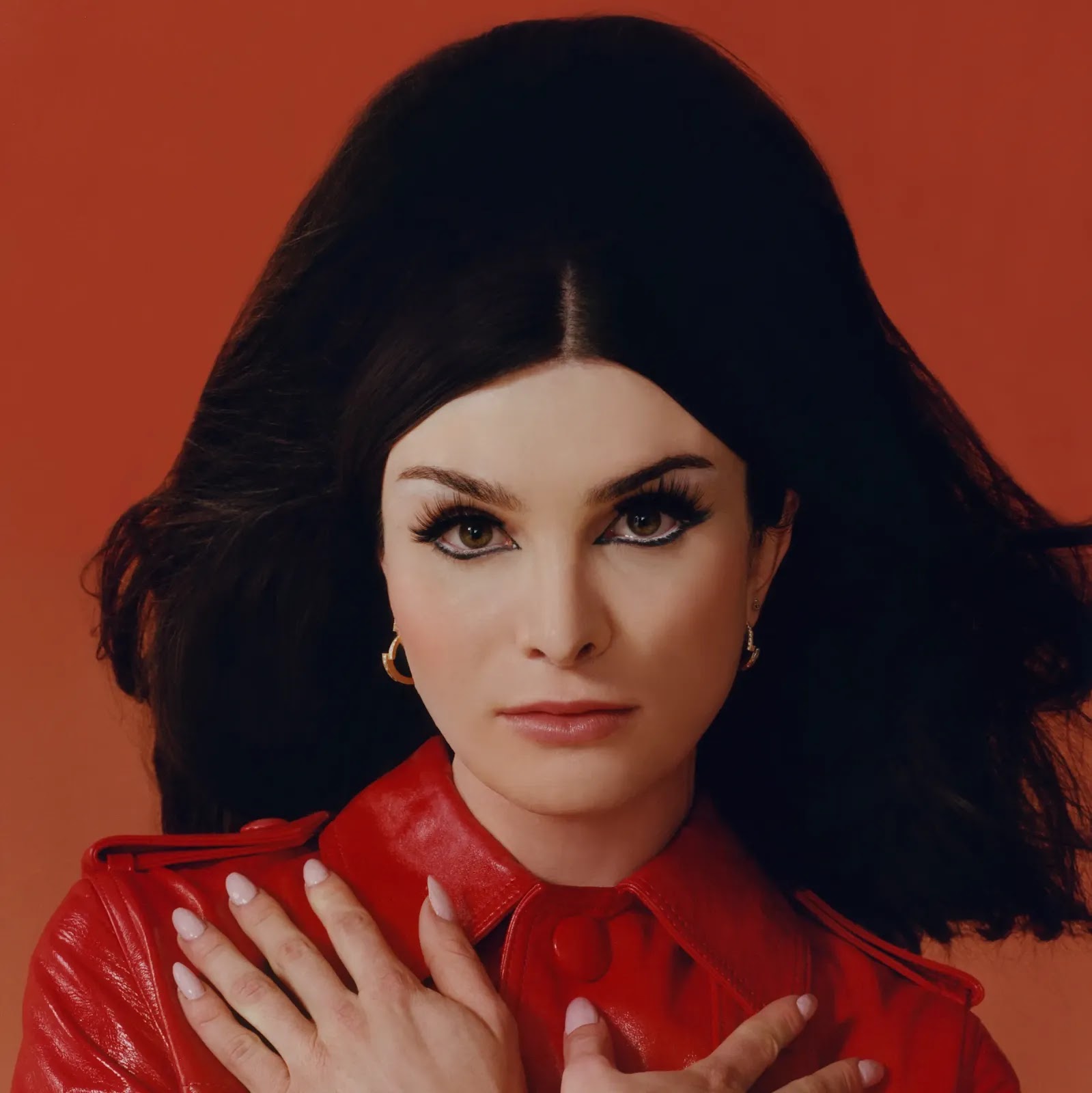
Dylan Mulvaney is a famous tik toker who has been sharing her transition since October 2022. She has visited the White House to talk about transgender issues and won Woman of the Year from LGBTQ+ magazine Attitude in 2023. 


Here are some topics and things that Bailar and Mulvaney touched on in bullet point notes( because they did not allow recording, I tried my best to jot down everything):

  • A lot of our common sense is another form of bias

    • Ex: “Girls are not as good at sports as boys → times, the qualifying time for girls' events are faster than boys

    • Breaking down our “common senses” can open our minds

  • Transphobia = white supremacy

    • White settlers killed queer people

    • Intersecting systems of oppression

    • Understanding history and why we stand with minority groups → That is what collective liberation is all about

  • How to find kindness with people who don’t understand you

    • Education

    • Therapy

    • Not forgetting the privileges you have (educational background, exposure, etc)

    • Think about how you always don’t have an answer to things → be patient

    • Believing that people can change

    • Ask them questions and try to get their opinions heard. Oftentimes, people don’t think critically. Massive amount of censorship is also important to remember

    • Make them question, make them reflect their beliefs

    • Add perspectives not change perspectives

  • Connections with others are the step to humanity

    • How they can see the human in every person

  • How parents make you cautious vs. teach fear & the importance of making home comfortable/a space they know they can rely on

    • Bailar emphasized that even if society doesn’t accept your child home should always be a safe space for the child. 

  • We’ve all experienced gender and that means we’ve been restricted, meaning transphobia is harmful to everyone

  • We are all not the same, acknowledging our differences is key

    • The same systems/oppressions are fueling many different problems = collective oppression

    • By labeling people the same, we are disregarding people’s pain


It was such a valuable time and I truly still cannot believe I was able to hear both of their stories in person. 


The reason why I was not only eager to hear their stories in person but also to talk to Bailar was because of our similarities as swimmers, connections with Boston, queer, and people of color, and our deep relationship with our grandmothers. The same year that Bailar became the first openly trans athlete to compete in the NCAA Division 1 category, was the same year that I moved to Boston from Japan. It was quite a big deal in our town since Harvard is so close to our town. I was never really exposed to queerness since back in Japan, especially in 2015, there were barely talks about IGBTQ+ people (even though there is a big issue with anti-IGBTQ+, homophobia, and transphobia) and I did not know any trans athletes. As a swimmer, I did more research on Bailar and we had so much in common. He practiced at the same pool that I went to summer swim camps for, he was always around Harvard as a student and my family and I were always around that area, he came to talk at my high school when I was a middle schooler which I was so sad to find out I missed it and lastly he spoke at Oxy two years ago. I felt that I kept missing opportunities where I could show my appreciation for him. Every person who has heard him talk in person has told me that he is such a good talker so one of my life goals is to meet him in person and tell him everything I’ve been wanting to tell him since 2015. 


I knew I was queer but I never thought of coming out to my parents and family because of the cultural difference (I “officially came out” when I moved to LA for Oxy). Bailar also understood the cultural gaps that many queer POC experience. I would watch his YouTube videos and one of the videos that stood out to me was his coming out story to his Korean grandmother. He even talks about it at the end of every show (and still in shock again, that I was able to hear this in person and not over a computer screen) and he has a quote by his grandmother tattooed below his scars from his top surgery. I have a very strong connection with my grandmother and she is my favorite person in the whole world. I never felt the need to come out to my grandmother because I didn’t want to “confuse her” more and I was already content with how open we were with each other. But after hearing Bailar talk about it again, it felt wrong that my grandmother didn’t know about my bisexuality because she has helped me with so much throughout my life and I thought since she accepted me for who I am now, it would be unfair for her to not know that side of me. After the show ended, I had the opportunity to talk to Bailar and I told him how much I appreciate him as a queer POC athlete trying to navigate the world. I also told him how much I relate to him with his deep connections with his grandmother and I was able to express that he has pushed me to tell my grandmother (which I’m hoping to tell her in person when I see her next). I was tearing up with joy, excitement, and emotions I could not explain. 


Bailar was the first queer POC figure I was exposed to and relate to. It is truly amazing to see not only queer but the intersectionality between queer and race people/educators you can look up to. This represents exactly why representation is important, especially for young audiences who are still trying to figure things out in a society that is a complex and hateful place.



Monday, November 27, 2023

"Shock Influencers" Web Artifact


For my project, I endeavored to choose something very relevant to me—social media and its confluence of shock-humor "influencers." These so-called "influencers" consist of straight men who build social media platforms by sharing their conservative and regressive opinions on polarizing topics such as the LGBTQ+ Community, Women's Rights, Racism, Guns, and politics as a whole. The stances are usually disseminated through TikTok as clips from podcasts. However, these ideologies tend to be backed up by misinformation and are shared to an audience made up of impressionable teenage boys who thrive off toxicity and desire "shock content." Shock content is a subgenre "deliberately designed to evoke strong emotional reactions, typically through the use of graphic, disturbing, or provocative elements."

The video I created with my co-star, Izzy Yaffe, is a satirical recreation of the previously mentioned type of videos, specifically inspired by the influencer @Sneako. Sneako's entire platform revolves around sharing conservative perspectives with justifications brimming with xenophobia and untrue information. The podcasts serving as the source material for these Tiktoks feature the host of the podcast and the influencer engaging in conversations on highly polarizing topics. The host is typically in agreement with their guest, rarely offering a critical analysis of the influencer's claims or statements. My video differs because the host finally claps back. Additionally, in this age of the internet, fact-checking appears to be, quite frankly, absent. It is incredibly easy to start a lie and spread it to a large audience without doubt about the claim's validity. The audience of these videos will then agree with whatever Sneako says and incorporate the rhetoric into their beliefs, meaning that a substantial group of individuals is actively becoming less informed and more bigoted members of society. 

For my role, I embodied the stereotypical "douce bag" and repeated rhetoric common to the type I was recreating: misinformed and sloppily presented. I juxtapose my strong and bold claims with Izzy's calm and humorous demeanor. 


My Web Artifact

https://64.media.tumblr.com/44e7cae42626d135b11b324d49c89555/d725a3b84d2e298b-a4/s2048x3072/af61d4cef82472c48e453e774b114f9d2d406847.pnj

Photo Credits:
Then - Michael Evans/New York Times
Now - Jonathan Ernst/Reuters
Future - Ayandokunabosede/Clipartkey

The web-based artifact that I have created is a response to the fact that the advancement of LGBTQ+ rights only ever occurs upon protest, and politicians cannot be expected to enact laws supportive of LGBTQ+ rights unless there is public pressure from protestors. In fact, given a lack of a push for new LGBTQ+ rights, some politicians decide to take away rights from queer people. The format of the artifact begins with a large title on top stating “How LGBTQ+ rights come to exist…”, followed by three subheadings. These subheadings read “Then”, “Now”, and “In the future”. Under each of these is an image of an LGBTQ+ protest, with the “future” image being an illustration of a protest with silhouettes. In the footer, there is a line of text reading “Stop waiting around as lawmakers continue harming LGBTQ+ rights. Queer people must fight for their rights, or nothing will change”. This line is the most direct part of the artifact, actively highlighting the need for protest, as well as showing how politicians, when left alone, will not only not advance LGBTQ+ rights, but actively degrade them. This shows just how important it is to not only publicly pressure for equal rights, but to keep the pressure constant. The photograph underneath the “then” subtitle is taken a year after Stonewall, in June 1970, which was just 53 years ago. Looking at how much progress has been made since then, we cannot thank the politicians for “doing the right thing” and just handing queer people the right to marry or to exist. Those rights were hard fought and hard won thanks to the protesting and work of ordinary people, not lawmakers that all collectively decided that queer people should suddenly have a right to exist. Additionally, LGBTQ+ people still haven’t achieved equality, even today. It is imperative that protests continue, or else people like Ron Desantis will begin to degrade what limited rights they do have.


My Thoughts on the Future of Queerness in the US

 I think the last part of class that focused most on the present and future of queer rights was the most exciting yet terrifying to learn about.  The past has and always will influence how the present and future play out, but the present is considerably fascinating to me because it most directly affects us.  Knowing that we have come so far since sodomy laws and being considered mentally ill is heartening (despite the fact that it's literally the very bare minimum).  But like I talked about a little bit in Paper #3, the future for us as queer people in the United States is unpredictable.  

I emphasized the importance of sustaining hope, and hope is infinitely important in the context of the fight for queer rights, but it certainly doesn't quell the fear and uncertainty of not knowing.  The politics in this country have always fluctuated, not unlike a pendulum, and will likely continue to shift in ways we can’t even imagine.  But I also feel like critical theory is a sort of guiding light in these times of uncertainty as it allows us the chance to ground everything we learn about and move forward with it.  So that gives me a little bit of hope!


@duncantdothisanymore: George Santos and the Current State of the LGBT Community


 Captions:

Do you guys think that it ever crossed the people who fought for gay liberation like at Stonewall, rest in peace to all those who lost their lives there, by the way, 

but do you think it ever crossed their minds 

that somebody like George Santos could exist in the future?

—that all their work, all their fighting 

could lead to a gay Latino Republican Congressman 

using funds from the Republican Party to buy 

Onlyfans subscriptions, Sephora, botox, and Hermes items. 

I personally like to think that's why Marsha threw the brick


[@duncantdothisanymore]. “What i would give to go back and explain who #georgesantos is to gay people in the 70s #fyp #foryoupage #viral #gay #lgbt #gayhistory #lgbthistory #stonewall” Tiktok, 18 November 2023, https://www.tiktok.com/t/ZT8ffF25e/ 


*It should be noted that the aforementioned video contains misinformation, as no one died at the Stonewall Uprising

The Witch-hunt of Dylan Mulvaney: How Conservatives Use Trans Women on TikTok to Perpetuate Agendas

 Dylan Mulvaney is a young trans woman who went viral for her "Days of Girlhood" series very early in her transition. She made a series of TikToks describing her experiences and the milestones in her transition, and also voicing her opinions about trans issues in general. Little did she know that her existence on the internet would anger so many people. A video she made that drew immense amounts of backlash was on tampons, and how she as a trans woman carried them with her in case one of her female friends or even a stranger in the bathroom needed one. Her considerate actions and growing internet presence led to her to be featured in a Tampax ad about womanhood, and this was just fuel to the fire for conservatives.

     The TERF movement, or trans exclusionary radical feminists arose in opposition to the inclusion of trans women in feminism. Activists like J.K. Rowling tried to hide their thinly veiled transphobia behind concerns about women's safety, or the protection or women's experiences, but the goal or excluding trans women remains the same. The ignorance behind this pointed transphobia is palpable and has real effects. After being accused of trying to "appropriate women" or "invade women's spaces", Mulvaney came out publicly talked about the intensely negative effects of all of the hate on her mental health. While maybe some trans women can handle the hate on TikTok, there is a very concrete threat to their wellbeing that is harder to ignore. As anti-trans laws are signed into the books around the country, and the right to transition is on the docket for our notoriously conservative Supreme Court, trans women are right to be worried about their future. As a community, we have to stand with out trans brothers and sisters in the fight for LGBT rights. While some spoke up for Dylan and people like her, we need to present a united front against people like the ones in this TikTok, as well as the legislators stripping away trans rights today. 


Dylan Talking to President Biden about trans rights. She received hate for this as well.
Two conservative TikTokers, one being a podcast host and one more normal mother expressing opinions that many women on TikTok face. 

How Gen Z battles modern homophobia

Spending a lot of time on the Internet, whether that be on Instagram, TikTok, or Twitter, I have noticed a phenomenon in which queer teenagers act somewhat homophobic. Examples of this include saying things such as “I would never be gay,” “I hate gay people,” “beating the gay allegations,” or phrases generally surrounding homophobia. This not only displays modern Internet and Gen Z culture, but also shows how this new generation of queer youth interacts with each other and understands LGBTQ+ history.

In saying things with homophobic undertones, or things that are blatantly homophobic as a joke, there can be a clear understanding of the privilege of the queer youth, or newer generation of queer people. By referring to this “newer” generation, it is meant that this is a generation of queer people who have grown up or discovered their queerness in the age of the Internet. It is important not to underestimate the power and effect of Internet access on queer youth. For many, it provided an outlet to share their queerness when they may not have been safely able to in their home settings. For others, it allowed them to understand their queerness by reading about other people’s experiences in order to better comprehend their own. 


What I have come to realize is that in acting homophobic, this new generation of queer people, who are made up mostly of Gen Z, attempt to assert dominance, or at the very least, demonstrate that they are on the Internet and in real life and are there to stay. Many of the Tweets, TikToks, and Instagram posts that demonstrate these homophobic phrases reference, mimic, or emulate actual homophobic statements. They mock arguments used by homophobes in order to prove that they fail to bring them down. 


In modern society, there must be modern ways to fight against bigotry and homophobia. That modern way, for the Generation Z queer community, is through the Internet, and through taking back homophobic statements thrown at them in order to assure the world that they will always be there. What this ultimately proves for the future of the LGBTQ+ community is that they will continue to create ways to fight against homophobia. While externally it appears to be blatant homophobia, in reality, it is meant to bind a community together, and to prove the power of the Internet for a community in modern society.